
art nouveau
art nu-voh: new art
n. an international french art movement characterizing the turn of the 20th century; a decorative style found in architecture, posters, interior design, glass design, and applied arts; characterized by sinuous, sculptural, organic shapes, arches, curving lines, and sensual ornamentation.
also known as jugendstil in german, stile liberty in italian, modernisme in Catalan, and modern style in english.
it’s a post-industrialized society. we’ve jumped head-first into the turn of the century and we’re past the point of no return. now, it’s a matter of figuring out what to do with this new world we’ve created. it’s a time of unprecedented accessibility in communication, mass migration between cities, democratization of institutions, and international political turmoil.
what else is one to do if not create art? it’s the roaring twenties, baby.
these were the conditions in which the world saw the rise of art nouveau. in paris, what started as a steady and experimental drip of inspiration from the studios of artists and architects quickly turned into a flood of ideological, social, and political sentiments that resonated profoundly with the masses. this stream spread at a rate that could not be matched by a force any less powerful than art.
art nouveau is the art style without a style. it’s art for the sake of aesthetic. aesthetic for the sake of beauty. purely eclecticism made for purely the masses.
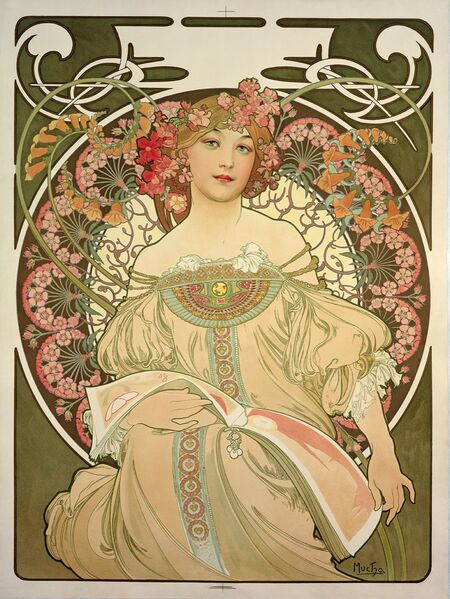
iconic poster illustration of woman in floral headdress in le style Mucha, inspired by japonisme
created using Artbreeder, Prosepainter, Collage by Studio Morphogen, Midjourney, Diffusion, StabilityAI, and Dalle2, as well as handpainting and digitally collaging where needed for cohesion
following the industrial revolution, hordes of families are moving away from the familiar rural towns and farms that previous generations had known for all of precedented civilization. assuming their new roles as factory workers, these laborers create their new homes packed like sardines into apartment buildings in flashy urban cities. the trees, oceans, bears, lambs, forests, birds, and insects that once filled their lives are now nothing more than a distant memory. the field of grass we once frolicked through is now a foreign metro station made of iron and steel full of humid air and dirty bodies. the old world is gone—we are in an era of modernity.
it’s the artists, then, who begin to acknowledge a certain feeling of longing. the artists who recognize the need to replace the natural and organic world that once filled our days with a new form of beauty. a need for new art.
in these unfamiliar concrete jungles, we see the emergence of decorative organic elements sprinkled in every parisian avenue. morale rises as we begin to see iron vines wrap the sixth floor balconies of the handsome sandstone apartments, advertisement prints imitating the bright colors of a sunrise in every magazine, and metro stations adorned by the wings of an abstract glass insect. it’s the nostalgia of everything we once knew—but beautiful. art is everything, everywhere, all at once.
and this is no coincidence. you see, we’re living in a new era. viva la revolution and cheers to the end of monarchy. in this new democracy, society belongs to the people. art belongs to the people. in the old world, it was the bourgeoisie who could enjoy the grandiose renaissance paintings of gods and christ and war and napoleon and king louis and pampered puppies. in art nouveau, it is not the subject that matters, but the people who see it. art is to be consumed on the street, in the cafe, and in the metro. aesthetics don’t have to mean anything—it’s about our emotional response to the experience.
mass communication, industrialized production, integration into people’s daily lives, and user optimization—sounding familiar?
the first art nouveau building in paris. front gate to the apartments made of iron and composed of the quintessential art nouveau arabesque line.
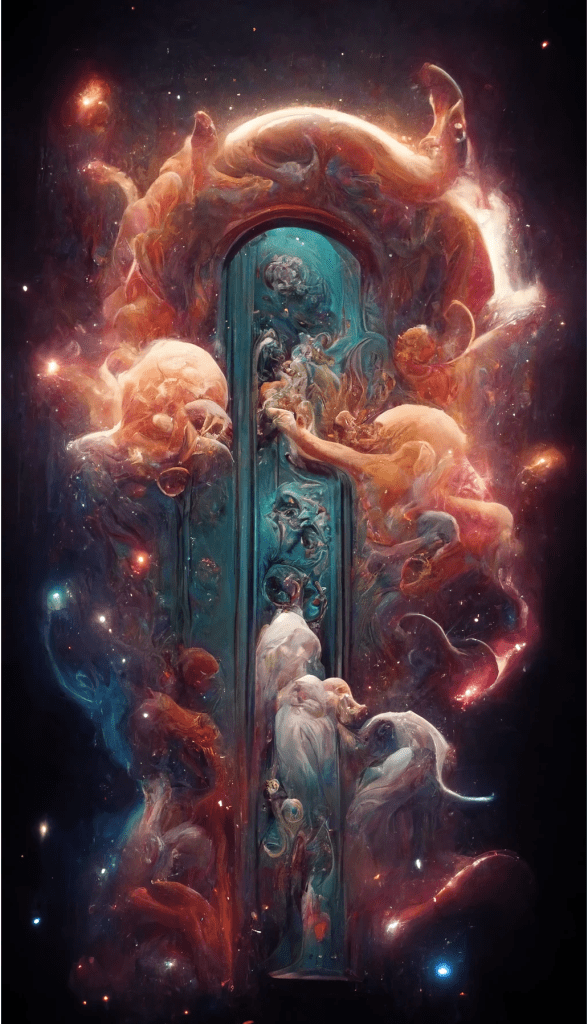
created with Stable Diffusion
fast forward one hundred years—our interactions, conversations, and experiences are characterized by our relationship to technology. just when it seemed like we couldn’t get any further from the natural world, the internet made it wholly unnecessary to have in-person interactions with one another in order to go about our daily lives. whereas we once took our positions in the factory lines to do our menial tasks until it was time to return home, we now stare mindlessly at our screens and respond to flashing bright stimuli.
nevertheless, can you think of an act more revolutionarily democratic than the internet? the blockchain was founded on ideas that would make the french revolutionaries weep with joy. 8 billion other people in the world who are suddenly accessible at the tap of our fingers. we consume more art today—in the form of photography, music, graphic design, advertisements, videos, and poetry—than our predecessors could ever dream of. by just downloading a few programs and clicking a few buttons, we can have an entire art studio on our phones. the creation of this art comes so naturally it feels almost instinctual. as if we are craving some form of beauty.
it makes sense that—despite all of the groundbreaking developments that have been made in the field of artificial intelligence over the past few years—it’s not the language models or deep learning machines that are grabbing the internet’s attention. it’s the art.
artificial intelligence doesn’t need to be making art. in fact, it shouldn’t be. it is wholly irrational to be using the energy of these supercomputers for the purposes of aesthetic. and, yet. here we are. art for the sake of art.

characterized by precisely linear drawing and the bold and arbitrary use of flat, decorative patterns of colour and gold leaf
created using Artbreeder, Prosepainter, Collage by Studio Morphogen, Midjourney, Diffusion, StabilityAI, and Dalle2, as well as handpainting and digitally collaging where needed for cohesion
what’s interesting about AI art is that it is fundamentally emotional. yes, there are some technical skills you need to produce something worthwhile (how to craft the perfect prompt inputs, understanding the different models’ training, extending and painting to refine the pieces, etc.). but, fundamentally, it’s not a matter of how well you can create. it’s about the artist showing us what they want to create. in an age of swiping, blocking, and ghosting, AI art calls our attention to relationships. allow me a moment to elaborate.
one of the most quintessential art styles to emerge from art nouveau was the impressionist movement. you know it—think monet’s garden and water lilies, degas’ backstage paintings of the ballet, renoir’s depiction of a bustling courtyard. these artists were not creating the grandiose paintings of kings, queens, and gods meant to be consumed by the royals and aristocrats. nor were they interested in creating pristine lines and portraits. no, these artists were concerned with something much more sensitive: the first three minutes of daybreak when the sunlight begins to hit the fishing docks at dawn, the energy shared between four friends sharing a picnic illuminated by the dancing sunlight seeping in from the trees, the grief and anger experienced after the death of a loved one that came far too early. these moments in still time experienced by the average person that become the most important fragments of humanity one can hold onto in a post-industrialized world. critics called the muddled shapes and outlandish colors ‘immature’ and ‘unrealistic’—it was the end of art. the impressionists insisted otherwise: they were creating art that was not meant to be true to life, but true to emotion. the artists’ emotional experience of the process of painting. each raw paint stroke left still visible within the pieces demands the viewer’s attention, as if desperately calling out, “this is a painting! I am a painter! I painted this because I experienced this! can you feel what I am feeling?”
it’s a moment that demands empathy. you are pulled in and invited to share this moment with the artist. it’s a relationship facilitated by the painting. how else could one communicate these human emotions of excitement and anticipation and loneliness and detachment and isolation? suddenly, the viewer is just as much implicated in the piece as the painter is. impressionism made it so that you didn’t have to be a gifted painter to be an artist; all you had to be was human.
so, if impressionism calls attention to the relationship between (1) the artist, (2) the art, and (3) the viewer, then AI art calls attention to the relationship between (1) the artist, (2) the art, (3) the viewer, and (4) the computer.
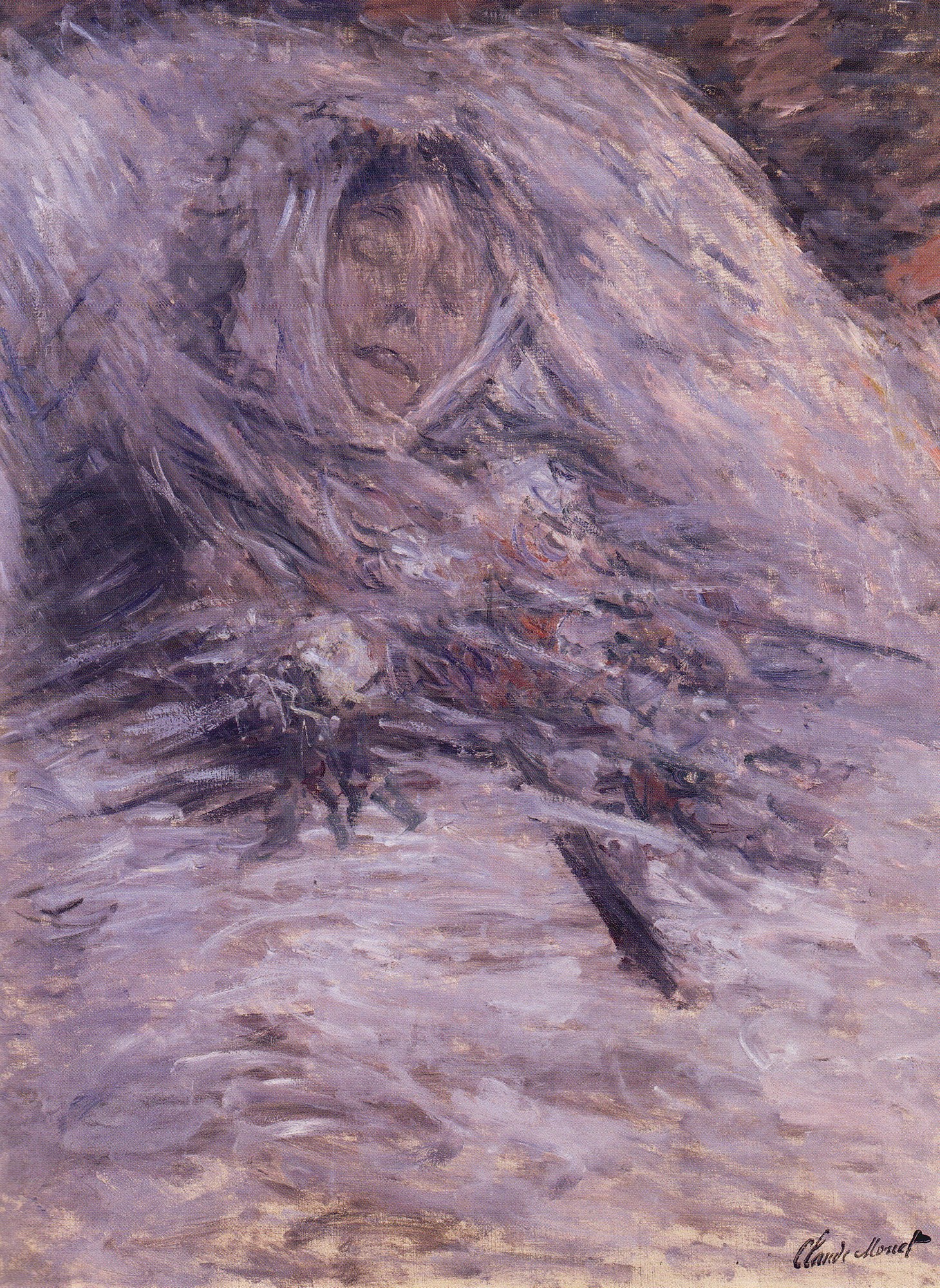
first wife of claude monet, subject of numerous paintings, mother of two before dying at the age of 32
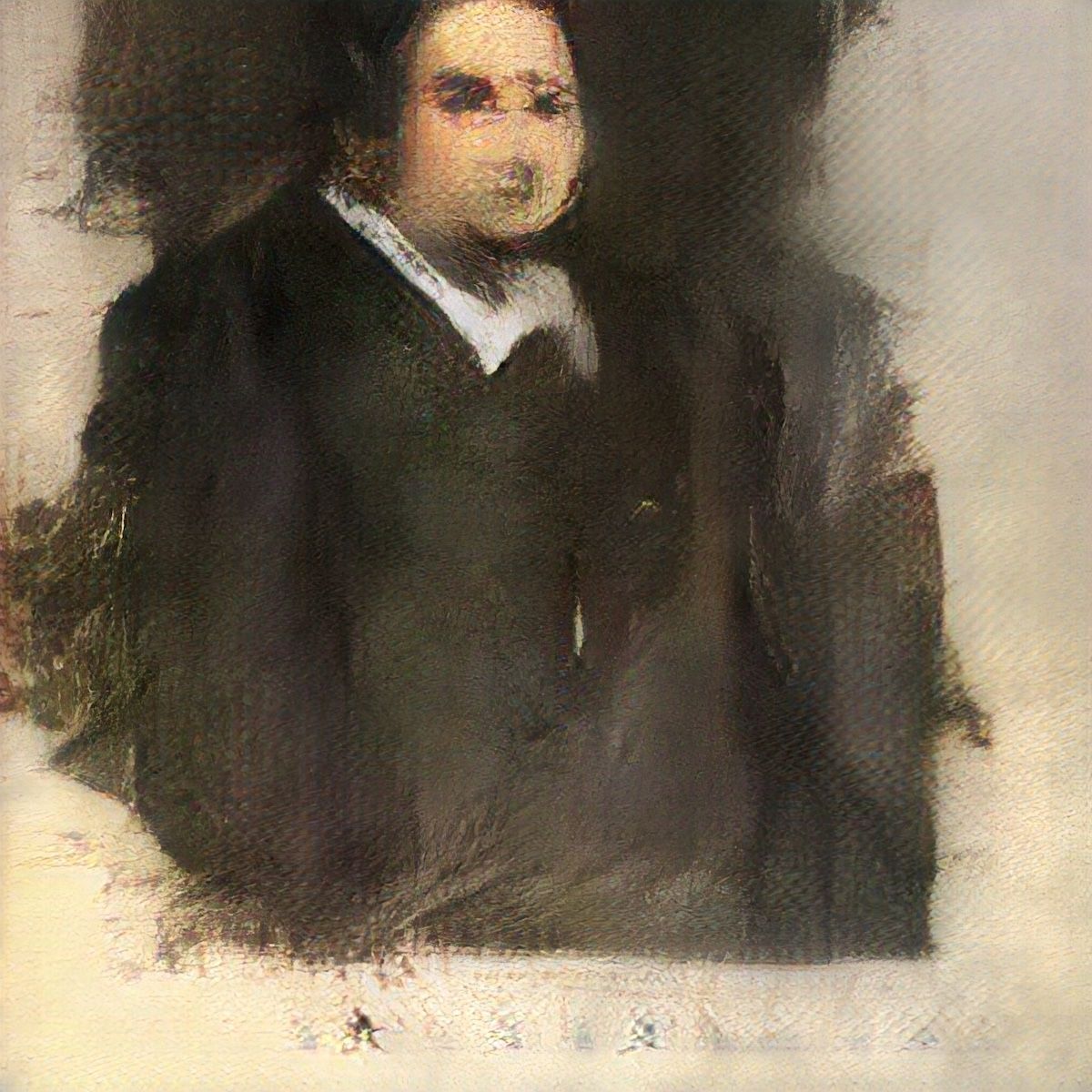
world’s first AI-generated painting by created by paris-based collective algorithm GAN’s (Generative Adversarial Networks)
do you remember the first time you came across a piece of AI art? and I mean AI art—not some meme on twitter that made you giggle before continuing to scroll into infinite nothingness. no, I’m talking about the art that made you take do a double take. the art that initially filled you with a sense of denial because, no way a machine could create something as beautiful as that. did it make you feel uneasy? do you remember how your initial defensiveness turned into awe? the slow acceptance? do the you remember the excitement? do you remember how long it took for you to figure out the mechanics behind its creation? did you try to figure out which combination of words the artist had to stitch together in order to create something as beautiful as this? did you zoom in to try and find some kind of machine error or flaw? did you think about what kind of worlds you would create if you were given a machine that could create anything?
and that’s just the thing. AI can generate anything. precisely because of this, the quality and subject of the art pieces only have enough appeal to temporarily catch our attentions. AI image generation is almost too easy. the hyper-realistic image generations can only be interesting for so long until they turn scary. the point of over-saturation is inevitable. we’ll soon tire of the images that look too much like the world we already know because these machines are quite literally incapable of coming up with their any of their own original ideas.
it’s the creativity of the artists, then, that excites us. AI art does not try to hide the fact that it is computer-generated. what actually makes AI art so interesting is the process of making it. it’s not how well you can paint—or, in this case, how realistic the image generation is. it’s about the humans behind it: the dialogue between the artist, the art, and the computer.
first, the artists’ dictations guiding the creation of the piece are the initial confessions we get to hear: what new world is this person imagining? next, the AI’s outputs give us insight into what it knows about us through reinforcement learning: how does this computer understand our world? our emotional response to the aesthetics of the piece puts us in dialogue with the artist: can I share this other person’s fantasy world? finally, our cognitive response to the piece—acceptance or denial—indicating our relationship with technology: how much do you trust this machine’s interpretation of our new worlds?
in the same way that impressionism and art nouveau give us the opportunity to step into the imagined worlds of our artists, AI art allows us to take a peek into the emotional inner workings of both our artist and the machine.
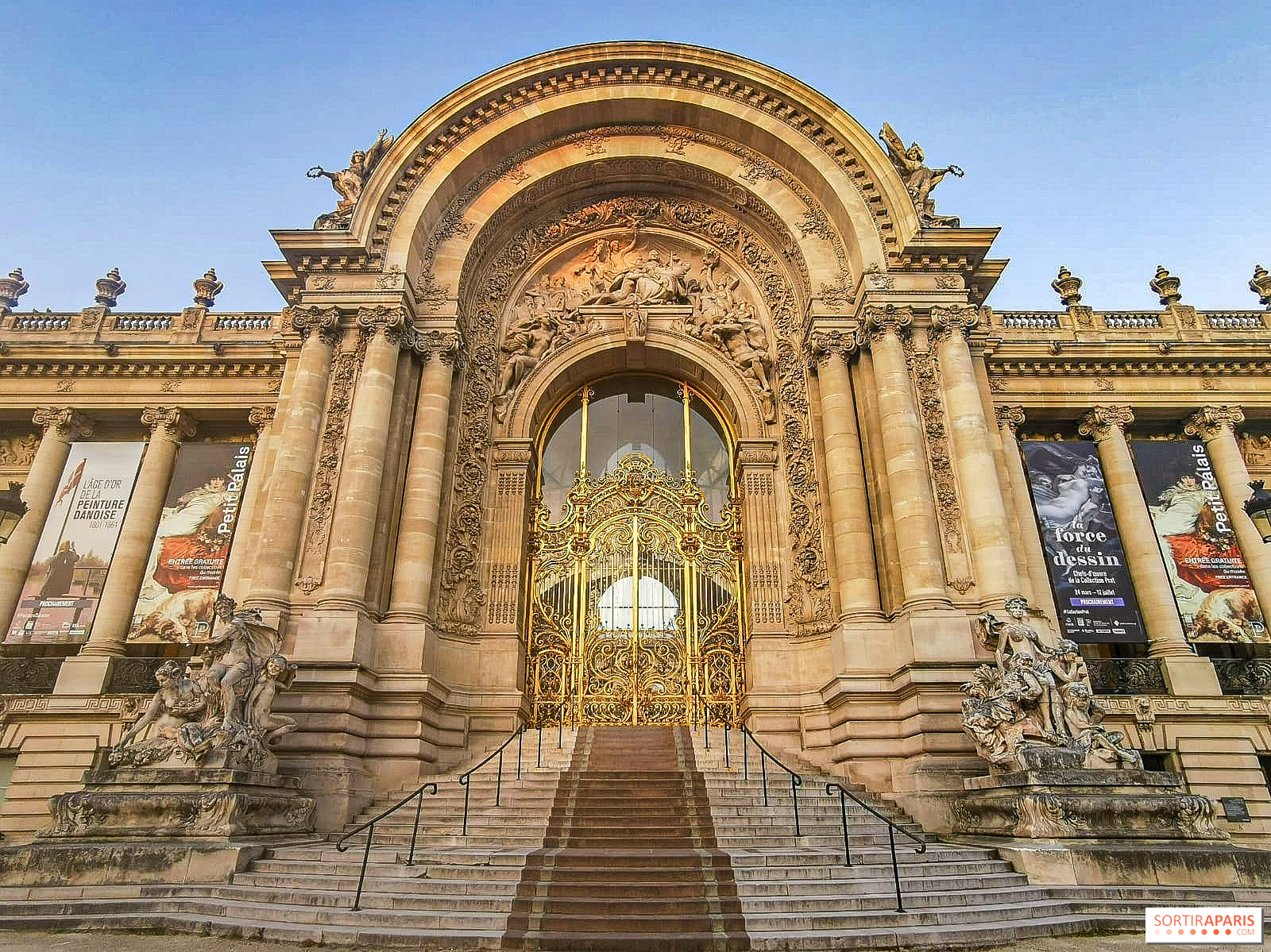
art museum constructed in concrete, iron, and glass for the 1900 world fair in paris
created with stable diffusion
it’s a tad scary. terrifying, really. every bit of media you consume relating to artificial intelligence warns you of how these bits of code are going to steal our jobs and the dangers of forming para-social relationships with the personal assistants coded into our phones. then, of course, there’s the fear that these computers are going to become sentient and overthrow us or, at the very least, leave us subject to a host of ethical ramifications.
but I think that these fears are exactly why AI art is so appealing to us. amidst an evolution of technology that seems so foreign—almost threatening—AI art tells us that there is beauty to look forward to. that this is, in fact, a new way to connect with other people. a new way to have relationships. it’s different from having a conversation with a language model or watching a computer solve an unsolvable math equation. it’s not trying to be human: this application of artificial intelligence enhances the relationships that human beings can have with one another, rather than replacing them. we can share in beauty and art together. we can share in our emotional responses together. just as art nouveau made the concrete and industrialized world a little more comforting, AI art makes the new digital age a little more human.
so maybe AI art is a coping mechanism of sorts? a more palatable and beautiful way of letting artificial intelligence into our lives? (are we the crabs in the pot letting ourselves get slowly boiled alive? have we filled the pot and turned on the stove ourselves?)
well, I hope not. we can only hope that it becomes more that. we can only hope that this paradigm becomes the ideological model for how we continue to gradually let AI into our lives: as a mechanism to enhance our relationships with one another, not replace them. we can only hope that we will soon enter world where people and machines can still be differentiated by one fundamental value: human creativity.
I will be the first to voice the many valid criticisms against AI art (namely, my disdain for the anonymity, appropriation, monetization, and unoriginality that has taken place within field). but I don’t think that these criticisms are quite enough to write off the entire medium. AI art is what will keep us hopeful for the future. we are craving this beauty. we need it. without it, we may just (1) spiral into a descent of pessimism and fear for our future or (2) lose all agency and humanity in this new digital age. and you have to admit, the pieces are breathtaking.
if AI artists are willing carry out this work with intentionality, authenticity, and vulnerability, I will remain hopeful for our relationship with technology. if we are willing to remain creative and empathetic, AI will be able to bring more beauty into our lives. we’re already in the midst of it. now, it’s just a matter of being brave enough to take control.
it’s art nouveau. it’s the roaring twenties. and it’s time for new art.
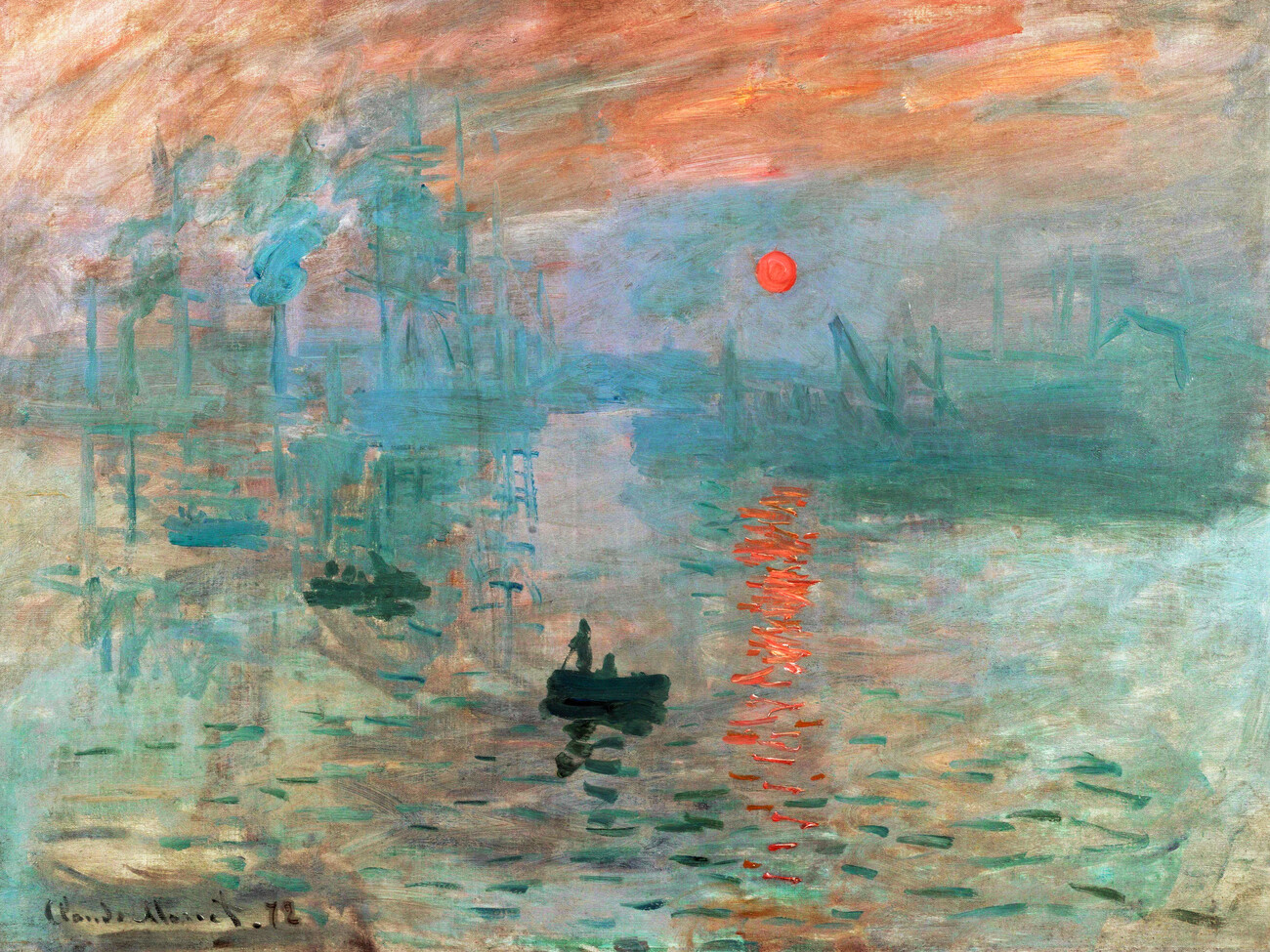
the mist of a hazy sunrise in a french harbor; considered one of the most prominent impressionist paintings of all time

created with MidJourney, winner of colorado state fair digital art competition
 nhiều chuyện, by angel lin