
Sa Pa (listenⓘ, also written as Sapa) is a district-level town of Lào Cai Province in the Northwest region of Vietnam. As of 2018, the town had a population of 61,498.[1] The town covers an area of 677 km2 with an elevation of 1,500 meters. The town capital lies at Sa Pa ward.[2] It is one of the main market towns in the area, where several ethnic minority groups such as Hmong, Dao (Yao), Giáy, Xa Pho, and Tay live.
from the corner of my eyes, I saw a lip quiver. no, no, no, please don’t. before I could even think to panic, the little boy’s eyes started welling up with tears. suddenly, a loud and tearful wail: “TẠI SAO CHỊ MUA TỪ HỌ VÀ KHÔNG MUA CHO EM?” WHY DID OLDER SISTER BUY FROM THE OTHERS BUT NOT FROM ME?
I rushed to console him, employing what limited vietnamese phrases I knew to soothe a crying child. phrases that my aunts so often spat out it in frustrated whispers to their toddlers when they were being fussy at church: stop crying! don’t do that! what are you doing? you’re okay! please stop! please don’t do that! please??
it was no use. more deafening tears: “CHỊ ÔI, EM ĐÃ ĐẾN ĐÂY TRƯỚC ĐÂY. ĐIỀU ĐÓ KHÔNG CÔNG BẰNG.” BUT OLDER SISTER. I GOT HERE FIRST. THAT’S NOT FAIR.
the boy’s crying seemed to encourage the others. the commotion was bringing out every other six-year-old selling colorful woven bird toys in the square. suddenly, they were all crying, surrounding me and calling out: big sister, big sister! buy some toys from me! buy some from me! I suddenly had a swarm of unbearably adorable yet deceivingly entrepreneurial children dressed in brightly woven colors attacking me from every angle. they were shoving the trinkets up as close to my face as they could reach, pulling at the sleeves of my shirt, and trying to stuff a few contraband birds into my pockets and the oversized motorbike helmet that hung on my hip.
some of the other tourists who had taken shelter under the church’s now tightly packed canopy to escape the rain looked at me with amusement. the others looked at me with disapproval, as if it were my fault that I invoked the kids because I had taken the bait and bought one of the toys in the first place. but, I mean, come on. how was I supposed to know that buying a beaded bird toy from one of these innocent-looking juvenile solicitors was going to unleash a torrential downpour of hmong toddler tears?
to my relief, the poor fool whose turn it was to supervise the children’s’ commercial activities finally came out of the woodworks to scold them. he was skinny so he looked like a teenager, but was likely closer to me in age. he wore a green plastic poncho and was carrying several more folded up ponchos, likely selling them to other unfortunate tourists who were stupid enough to forget to pack a raincoat (present company included). he put on what seemed to be his best impression of an authoritative voice to discipline the kids: “HEY. if you cry, no one is going to want to buy toys from you. leave older sister alone. she probably doesn’t have any money anyway.”
ouch. but it worked! the kids eventually dispersed. some on the hunt for their next overly sympathetic victim and some to play in the rain. the other tourists had lost interest and turned their attention to look for the the next spectacle that would keep them occupied as they waited impatiently for their taxi cars to arrive. the only one that remained was the original crying boy. tears still streaming down his face, he began wiping away his boogers with the back of his bright blue sleeve in between pants and hiccups.
the older boy looked at me with an apologetic smile. I kneeled down, smiled at the little boy, and held my hand up: “I’ll take five.”
“this is as far as I can take you.” the taxi driver’s abrupt stop woke me from my nap. I had barely gotten any rest in the sleeper train the night before; my cabin mates had been engaged in a rowdy game of poker and there was no way I was going to bed before throwing my skin in the game. the hour-long taxi ride was the last leg of the journey and the fourth mode of transportation I had boarded since leaving hanoi the night before. one midnight motorbike ride, a night on a six-hour train, a sprint up a mountain on a cramped bus that smelled vaguely like puke, and a short nap in a taxi cab later, I was finally in the remote lao cai, sapa.
to my left, the most breathtaking view of rice-terraced hills as far as the eye could see. the stalks of grass holding the rice grains were a vibrant yellow, an appearance that characterizes this precious time of year: harvest season. the outline of the fields on each level followed the curves of the hills, making them look like a bunch of lazily stacked pancakes forming hundreds and hundreds of staircases. it was still early so you could see the fog creeping in between the layered mounds.
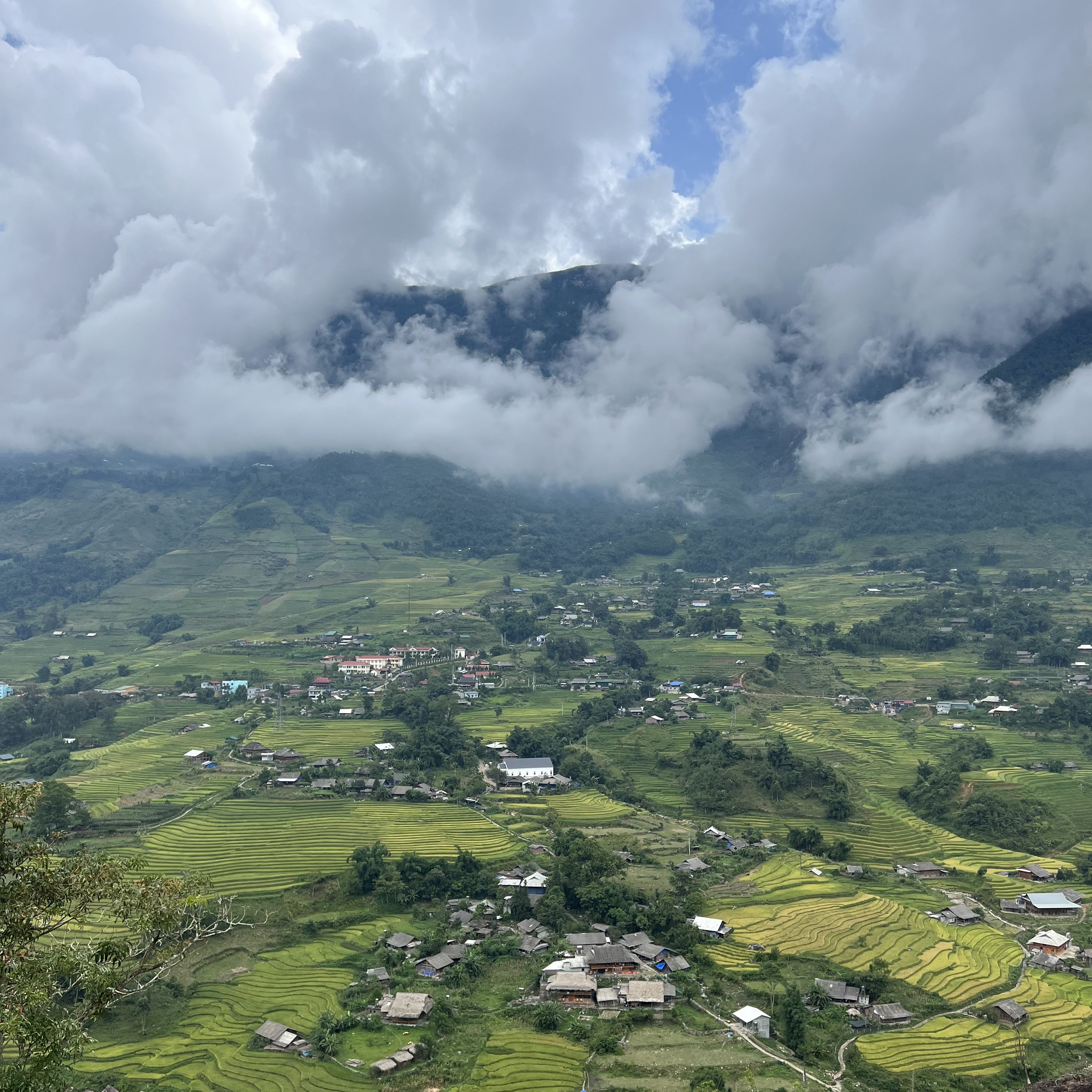
to my right, a harsh hill made of stone and gravel that, I kid you not, was just shy of a 90 degree incline. there was no summit in sight. I took another look at the the waterfall rushing alongside the slippery path and noticed an anxious bead of sweat dripping down my forehead. unbothered but courteous, the taxi driver moved to retrieve my suitcase from the trunk of the car.
“wait, where do I go from here? how am I supposed to get up that hill?” I asked with a slight tremor in my voice as he dropped the luggage at my feet.
the taxi driver gave me a taunting smirk, “ask the village women. they know everything,”
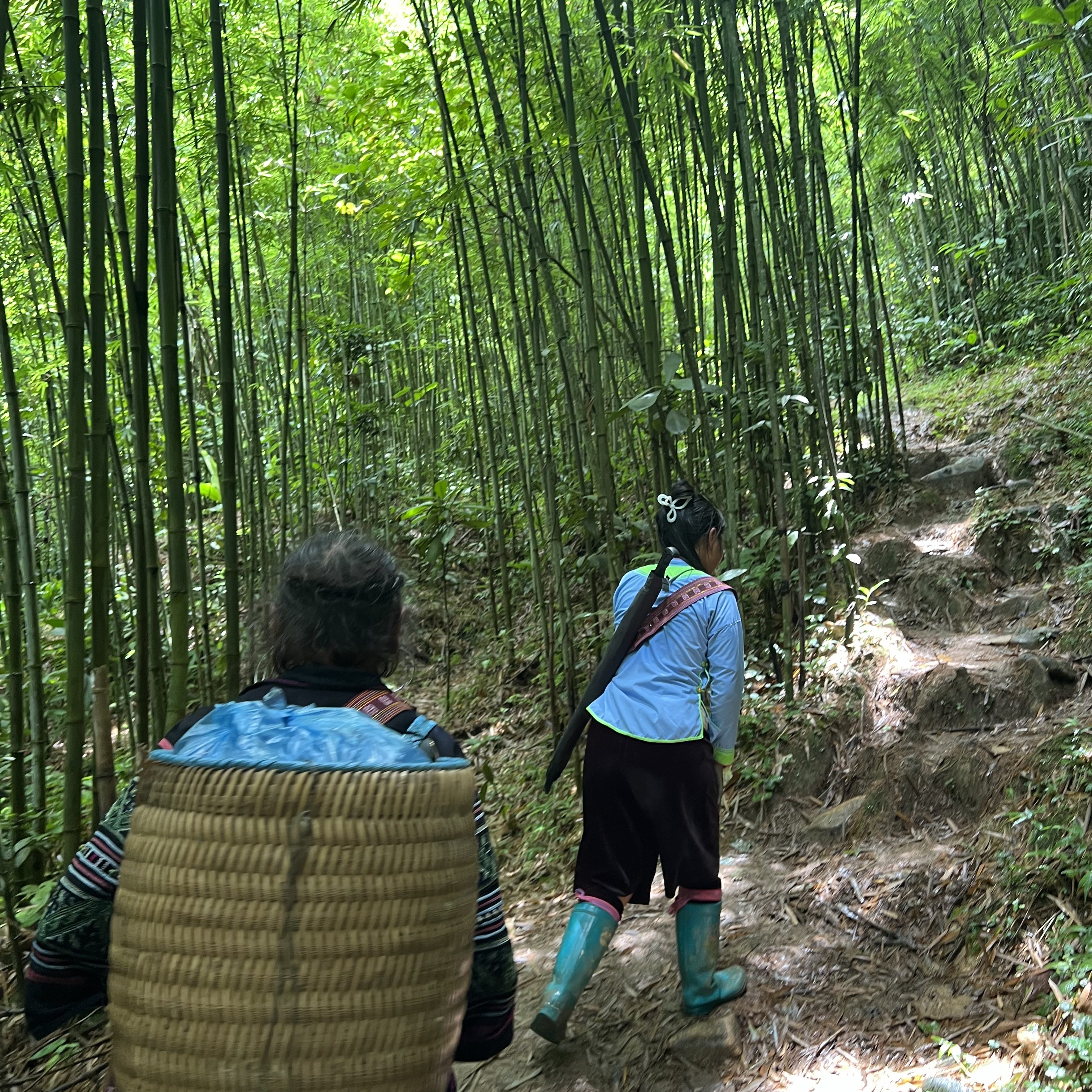
and as if on cue, I suddenly had a hmong woman attached to me by the hip on each side. the two were wearing the same indigo clothing weaved with intricate, brightly colored patterns. they fabrics were similar to the clothes that the children from the town were wearing, but one could tell that these were far more practical for working. the leg warmers that covered their shins were stained with mud, suggesting long days of trekking through wet rice fields. each of their earlobes were pierced at least four times over, with each piercing holding at least two oversized gold hoops. one woman looked like she was in her early thirties. the other woman looked like she was over a hundred years old.
they shined their brilliant toothy smiles at me and linked my elbows so that the three of us formed in a human chain, arm in arm. “soooo, where you going?” we started walking up the hill and, immediately, I felt my breath turn into a pant. despite each of them wearing a large basket strapped to their backs, the ladies seemed to have no problem keeping an alarmingly quick pace. the hundred year-old lady was holding my suitcase with one hand and supporting my weight with the other. (it was in this moment that I realized the long-term importance of fostering heart/lung health and vowed that I would change my ways and begin doing cardio once I returned home…)
between my pants, I shyly pulled out my phone to find the information for the homestay I had found online. “I think, uh, it’s called, um let me see…”
they looked over at my phone and grinned: “ohhhh—lazy crazy. we know where this is, come on, hurry, let’s go.”
my spoon scraped aggressively against the ceramic of the plate. I had finished my entire plate of fried rice chicken fried rice within ten minutes of it being placed on the table. the mother chicken and her little chicks clucking outside the window evoked only a brief wave of guilt that was ultimately no match for my ravishing hunger.
I looked across the table and saw Pang smiling quietly at the chickens as well. she promptly grabbed the bottle of hot sauce at the center of the table, squeezed it into a corner of her plate, and continued her meal. we had just spent the past hour trekking through about 3 miles of rice fields, which were freshly slippery and freshly muddy from the afternoon rain. in the middle of our trek, the rain started up again, soaking my brand-new and already muddied white canvas jumpsuit. we took shelter in a local remote restaurant tucked away in the mountains. you could hear glorious hymn of rain droplets bouncing off of a metal roof at full volume.
I had met Pang earlier that morning when I was still in the town center under the church canopy. my homestay was the most remote of all my fellow bus companions and, thus, I was the last one to be dropped off. from my bus seat, I had seen her bright pink shirt from across the courtyard. we locked eyes and, before I even had a chance to step foot on the stone-paved roads, she had claimed me as her lucky companion for the next several days. she was right at the door when I de-boarded the bus. in my sleep-deprived haze, I recall being off put by her uneven smile and the blue discoloration that covered her hands and finger nails (I later came to learn that this blue came from the indigo plants that the hmong women use to dye their clothes. for the next week, my hands would be stained with this same blue dye). I estimated that she was probably younger than me, but I referred to her as chị, older sister, to be polite. I could see the relief wash over her face when I greeted her in vietnamese. she introduced herself to me as Pang and she made the arrangement clear: she would take me on a one-on-one four hour hike in exchange for the low, low price of 500,000 vietnamese dollars. what was I—a confused, flustered, and people-pleasing solo-traveler starving for human interaction—to do other than to say yes?
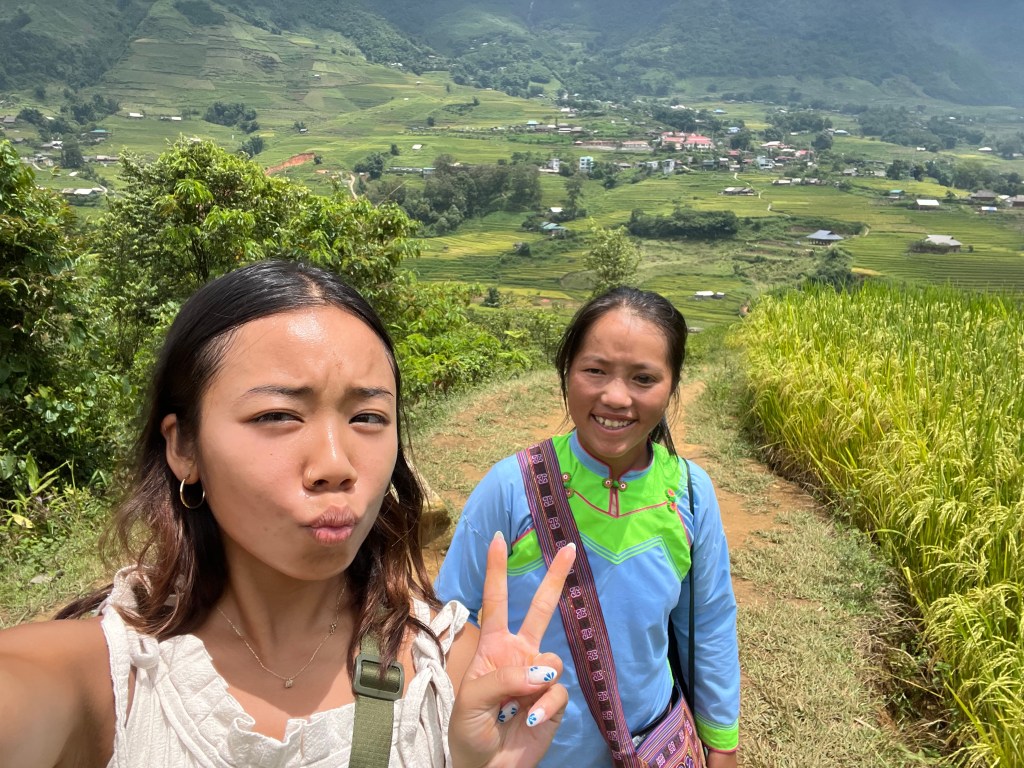
she met me at my homestay (which I came to learn was endearingly known as ‘lazy crazy’ by the local community) and she held my trembling hands as I inched slowly down the steep hill. I came to realize how naïve I was for thinking that this was going to be the most treacherous slope that I would encounter on our trek that day. in the blaring sun, I endured deceivingly deep mud pits, towering bamboo forests, and sneaky piles of water buffalo dung. the reward: some of the most breathtaking views of my life. during our hike, I came to realize that there was a very large and robust economy of entrepreneurial hundred year-old hmong women that roamed the hills. they carried baskets of treasures on their back: hand-woven scarves, colorful bracelets, gold metal bangles, and knit purses. being the sucker that I am, I realized that I had made the trek back to my homestay even more difficult because I had bought so many of these treasures. I would now need to figure out how to carry without slipping into the wet mud. pang tried to stop me from overspending my money on the women’s bait but I was a lost cause; I have never been known to back down from a good deal or a chance to barter.
our conversations were an assortment of vietnamese, english, and the few phrases she taught me in hmong. Pang’s tongue could expertly navigate the hmong, vietnamese, french, and english languages with ease, although she said that english was always the hardest for her. we talked about our lives. she asked me about where I came from and why I came here. she asked me why I was alone. she asked me if I had anyone who would come with me the next time I returned to sapa. I asked her about what it was like growing up in these mountains. I asked her what she liked about the summer season. I asked her about the types tourists who came around these villages. I asked her about the types of people who stayed at her homestay. “all types,” Pang said, “but I like the spanish the most. when they come stay at my home, they drink so much alcohol. it is always so much fun.”

what surprised me the most was when I asked her about the other women: “so, like, I’ve seen all these women walking around these trails. and they’re wonderful, they really are. but, uh, where are all the men? I don’t think I’ve seen a single hmong man out here.”
she let out a chuckle as her spoon scraped the plate of rice, “oh, the men don’t work . it’s just the women.”
I was dumbstruck, “what? you’re telling me it’s all women making the money?”
“yes. the men in our village are shy. they aren’t willing to learn english or speak to foreigners. so it’s just the women. we make the gifts by hand and then sell them to the people on our tours”
“and it’s always been like this?”
“well, for my whole life. my mom and my aunts are tour guides. it has always been my dream to be a tour guide.”

Pang was just a green twenty years old. on our hike, I came to realize that there was an unspoken hierarchy of seniority that the women selling the woven goods were all adhering to. everyone knew everyone and everyone was competing to get the best sale. but everyone also knew whose sales they could sneakily steal and which sales to not get in the way of. it was clear that Pang was a newcomer to this market. she was the youngest trekker I saw during the entire time we were on the mountain. she was fighting to make herself respected among the others. she looked like a baby next to those older women, but she put up a good fight for herself.
“well, so what do the men do?”
“my husband is at home right now cooking and taking care of the kids.”
I choked on my spit, “your kids?”
Pang grinned. the rain had just let up and the sun was starting to peer through the clouds. “yes. a boy and a baby girl. do you want to go to my home to meet them?”
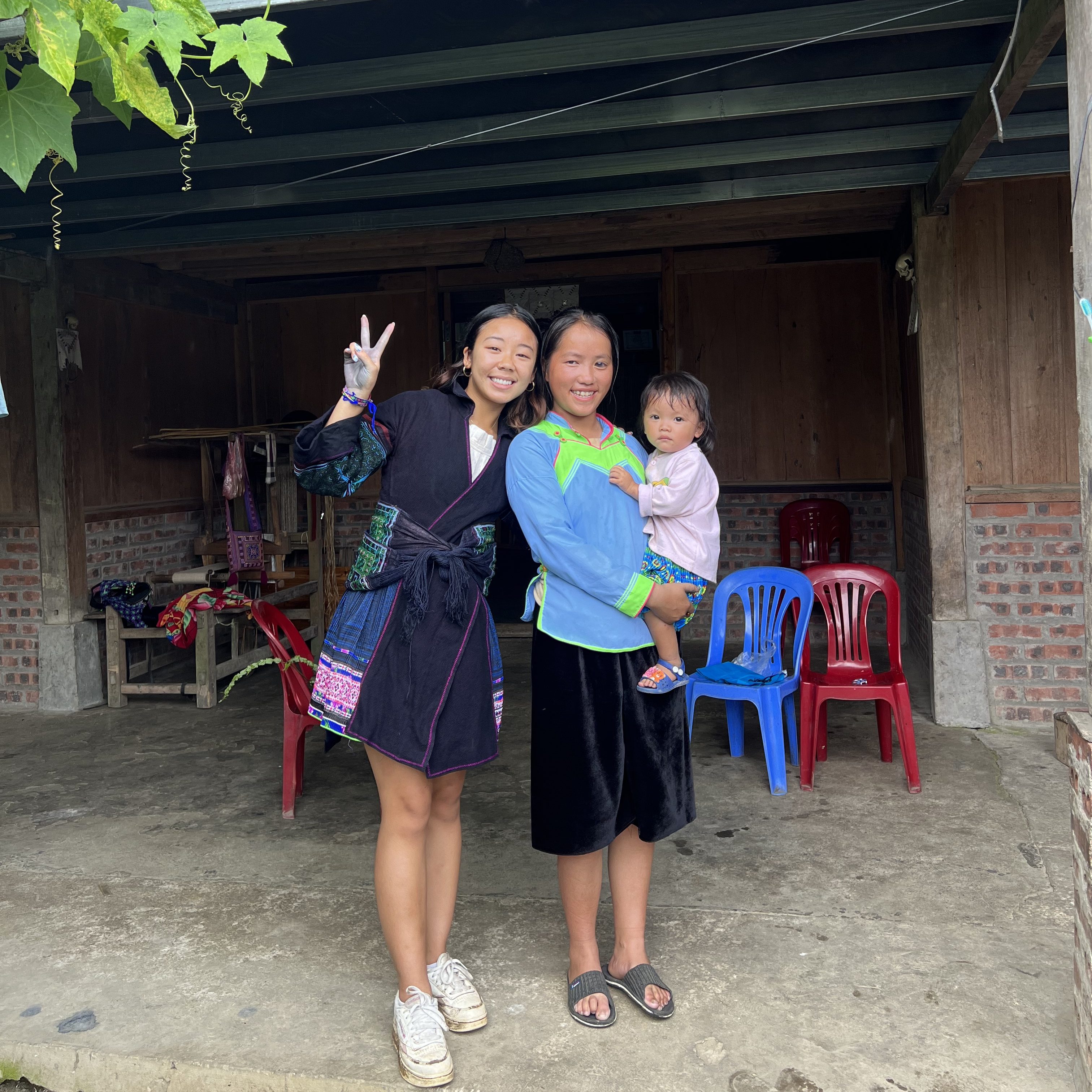
I have been to france and had the finest of the world’s wines. I have sat through stuffy wine tastings in nestled in rolling fields of napa. no better wine has ever touched my tongue, however, than the plum wine harvested and aged by Chị Nhi and Anh John, the hosts of the lazy crazy house. the sweetness of the fruit flirts with the heaviness of the alcohol on your tongue to create insatiable desire for more of the intoxicating juice.
the sugary wine was paired with a grand kamayan feast, a send off family dinner for Ira and Tristan. the two were digital nomads from the philippines who were concluding their two-week stay at the lazy crazy. their love story of long distance longing and romantic rendezvousing is enough to make shakespearean sonnets pale in comparison. Tristan had gone to school in the states while Ira was back home in the philippines. their reunion was a highly anticipated six-month trip through southeast asia. I could listen to the two of them tell their thrilling tales about their adventures in thailand and the northern vietnamese mountains for hours. their blatant love and affection for one another was enough to make my own heart hurt with how much I missed my boyfriend back at home in the states.
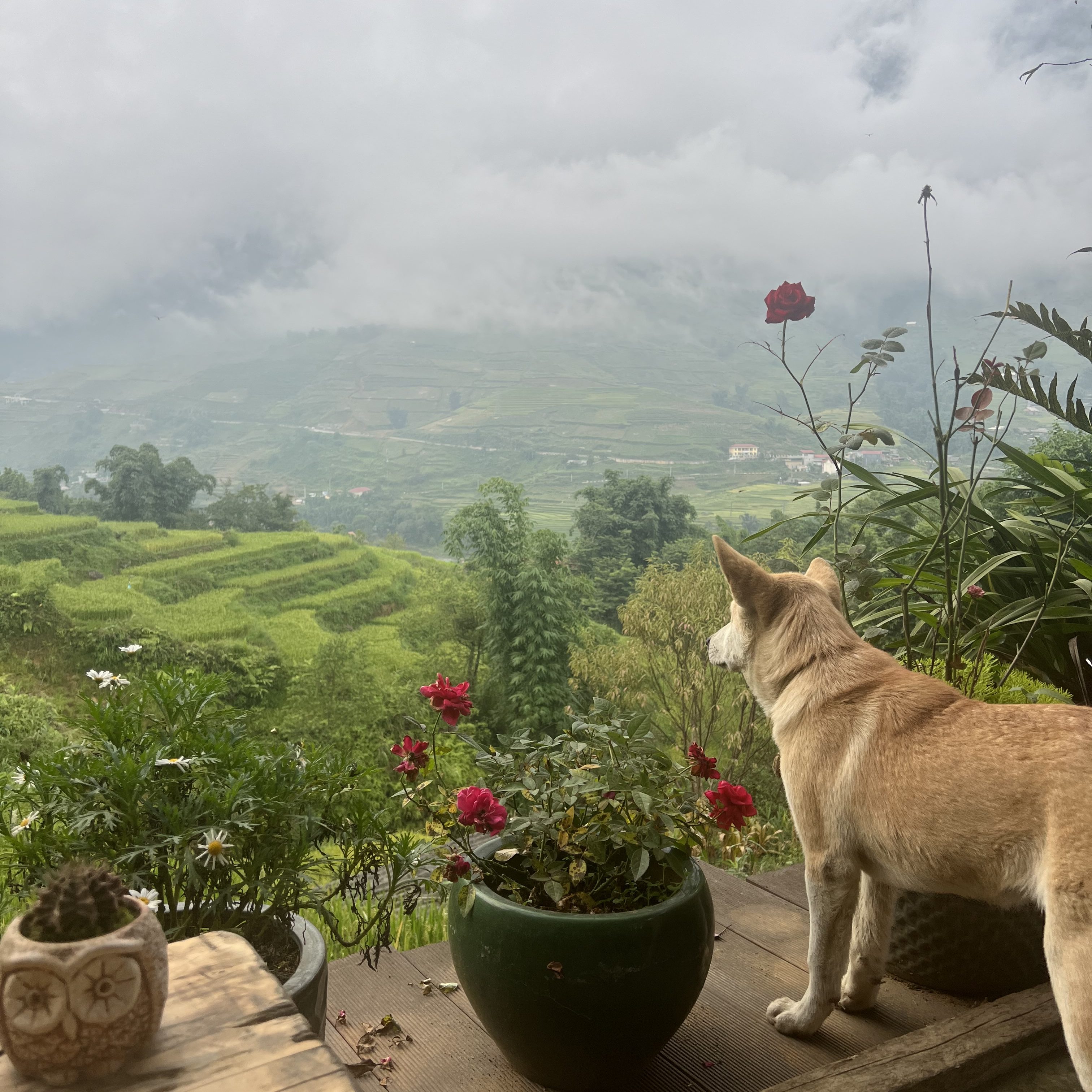
the plum wine had gotten all of us excited and we decided that would continue the night at the bar down the hill. me, Ira, Tristan, two particularly adventurous swiss named Justin and Aurélien, and an especially bold bangladeshi australian couple named Sachahal and Anika, made our way from the homestay down the treacherous hill in the pitch black of night. we were led by a five year-old little girl whose family lived in one of the other houses on the hill. she spent her days running around causing mayhem at lazy crazy, taunting the foreigners and stray dogs that came by (I never got her real name but the nick name everyone called her by was muối, which literally means salt). she was fearless as she maneuvered the path down the hill but cried out in tears when one of the neighbors’ dogs began barking at her.
we had been chatting around a bonfire, smoking cigarettes and drinking watered-down vietnamese beer. we were strangers telling one another stories about our lives, how we got to where we were, why we decided to leave our countries, and what we found when we left. we discussed racial politics, interrogating switzerland’s lack of diversity and questioning france’s postcolonialility. we offered our opinions on about the philippines’ relationship with america and learned what life was like for a foreigner in australia.
we had finally gotten to the point of the night where we started talking about our ex-lovers who had wronged us in the past. when it got to my turn to tell my story about my weird-second-string-loser-whose-not-worth-mentioning-ex-boyfriend, the group was enraptured. Justin, the talkative swiss, looked serious and said, “you know what, I know exactly what this is. we have a saying for it in french.”
“is that so?” I smirked in response. we had all been talking for hours and our group was clearly and obnoxiously the loudest in the bar. the night was winding down and some of the local boys from behind the bar were pulling tables together to set up a game of poker.
justin paused and looked solemn. suddenly, in a voice that echoed through the mountains, he exclaimed “UN FILS DE PUTE!”
I woke to the sound of a rooster calling in the distance and chatter right outside my door. my body ached from the hikes I trekked with Pang over the past two days and my head was hurting from having one too many glasses of plum wine and karaoke the night before. I untangled myself from the mosquito net in a disoriented daze and wandered over to the water faucet outside the kitchen that we called a sink.
the guitar-playing, motorcycle-riding, long-haired, soft-spoken homestay host Anh John surprised me from behind while I was washing my face. “Angel,” he called out with straightforward command. having been traveling on my own for so long, I had almost forgotten what it was like to have someone call me out by name. it was a comfort that I forgot I missed. “do you wanna go swimming?”
“excuse me?” I was hungover and flustered. “swimming? I don’t know… my bus leaves in town later this afternoon and—”
“I’ll rebook it for you,” he answered matter-of-factly. “it’s Ira and Tristan’s last day. let’s all go on one last adventure.”
“oh, I don’t know. that seems like a hassle and I don’t wanna burden you and, besides, I have these plans for—”
as if on cue, Ira and Tristan emerged from the living room to join us. “one last adventure?” Ira inquired. I could almost hear the bittersweetness in her voice.
I thought about it for a moment. in one week, I would be back in the states. sapa was the last stop on my grand tour of vietnam. I had spent the past month and a half seeing countries I had never known to imagine before, eating foods that risked my gut immunity, and walking shores that taught me about the courageous and lionhearted roots I came from. in just one week, that was all going to be over. I would return to my real life, worrying about job and adulthood and gas prices and rent.
“okay.” I said with a grin. “one last adventure.”
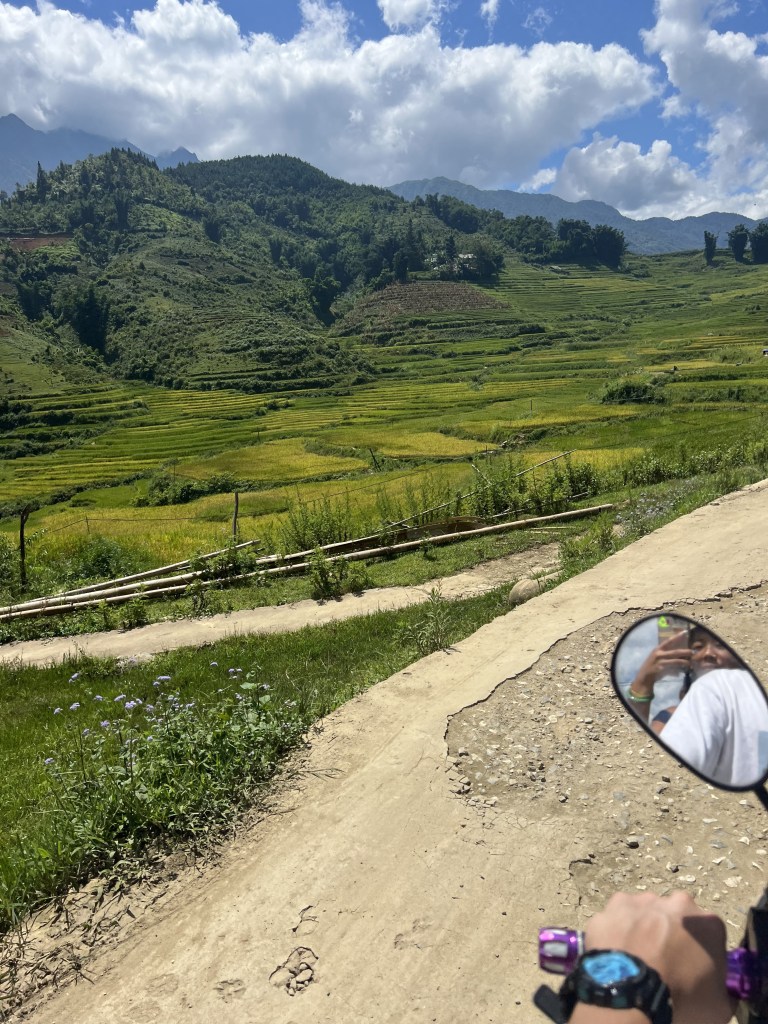
I looked down at the water rushing violently down the river. then I looked at the precarious pipe that laid a ten-foot path that we would have to maneuver across in order to make it past the river. the pipe looked sturdy enough, but I was shaking in my two-inch platform doc marten sandals.
“what do you mean we have to cross that??” Chi Nhi exclaimed. she looked to her husband John in bewilderment. Anh John had promised us that we would be headed towards the most beautiful waterfall swimming hole in all of sapa. we packed our bags and set off on our motorbikes that morning. little did we know, we would be driving our bikes up steep hills that would make even a water buffalo nervous, sneaking through some villagers’ backyards, and stomping past wild boar poop. apparently, we were taking the back route. the place where we were headed was a restricted area that was guarded by local officials.
“don’t worry, em. look—quá dễ!” John took off his shoes and practically skipped across, one foot across the other like a dancer.
the rest of us didn’t look so sure. the swedish boys were the first of the bunch to brave the perilous pipe. one foot in front of the other. their tall, lanky statures somehow didn’t topple over when a gust of wind blew by and they arrived on the other side, safe and sound. they waved at us from across the river. “easier than it looks!” Justin yelled through cupped hands. I couldn’t help but let out a terrified chuckle.
Ira and Tristan were next. Tristan grinned, as if he had been waiting for a bit of adrenaline that would shake up this already precarious journey. he pranced over with the grace of a chimp in his natural habitat. Ira, equally graceful and adventurous, was next. she held her shoes in the same hand she used to grip faithfully onto her go-pro. in the other, she lifted her long skirt in a picture of modern elegance.

that left me. on the other end of side of the river bank holding hands with the little five-year-old muối. suddenly, without warning, she burst into tears. “I DON’T WANT TO GO. I CAN’T DO IT. IT’S TOO SCARY.” great. more crying toddlers.
“no, no! don’t worry. it’s not that hard. here, you can do it like this,” I got down to her level. swallowing my pride, I straddled the pipe and demonstrate a butt-scooting technique to help her get across. the others shouted words of encouragement from across the river. I stood back up to let her get on the pipe. her little legs were barely long enough to wrap around it. with bravery that comes only from being a little kid, she wiped her tears and got to work, butt-scooting inch by inch across the pipe.
finally, it was my turn. I took off my shoes and did a quick sign of the cross. the pipe looked sturdy enough but, with the water surging below into a pile of sharp rocks, you couldn’t be too careful. I looked over for encouragement across the river bank but the others had already moved onto the next exciting object of interest. only Ira remained, cheering me on with a hopeful smile.
as I placed one foot onto the pipe, muối let out a screech of excitement from the other side. caught off guard, my other foot stumbled. before I knew what was happening, my brand-new platform docs which had faithfully carried me throughout all of vietnam slipped from my hands and fell down to the streaming water below. “you have GOT to be kidding me.”
I looked down, expecting the devastating sight of my shoes being carried away by rushing current. to my delight, they miraculously landed on a rocky ledge about four feet below. today, I was god’s favorite.
I gritted my teeth, suddenly all fear of falling into the river dissipating from my mind. I was filled with nothing but determination for rescuing my beloved sandals. with the grace of an experienced rock climber (I had never been rock climbing before) and the upper body strength of someone who could just barely bench press a standard barbell, I hoisted my body under the pipe and onto the ledge. I rescued my shoes and, fueled by pure adrenaline, lifted myself back onto the pipe.
the nervous sweat that had accumulated between my toes actually served me well in offering some grip as I made my way across. when I finally made my way over, I was met with a triumphant cheer. we high-fived one another like they do in the movies and set forth to continue our trek to this illusive waterfall. but, before we could even take a step forward, something stopped us in our tracks. an officer in a green military uniform marching straight towards us with a look of pure malice.

they say it’s all about the journey, not the destination. and, in some ways, that’s true. but it’s also about the trip back home.
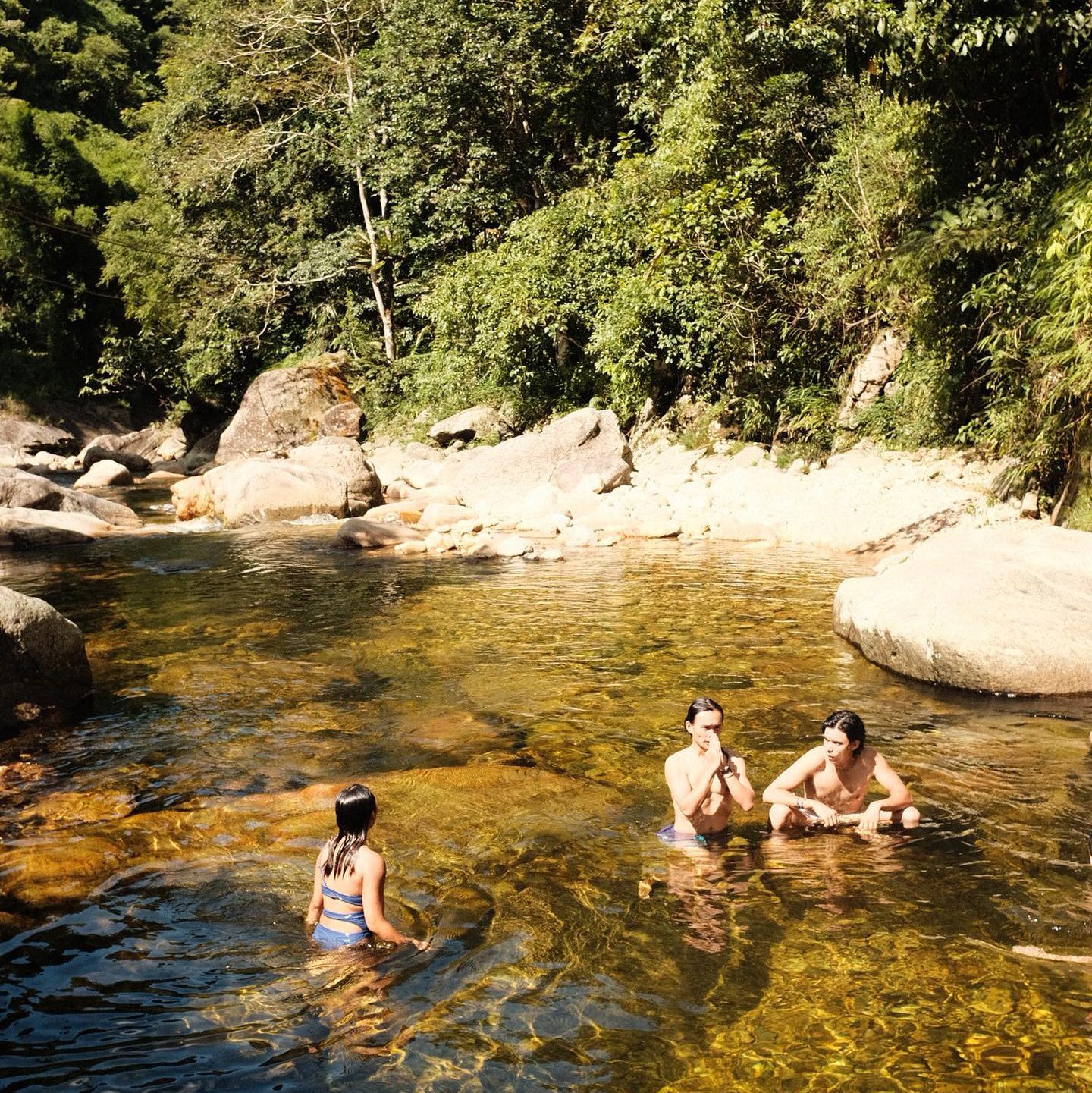
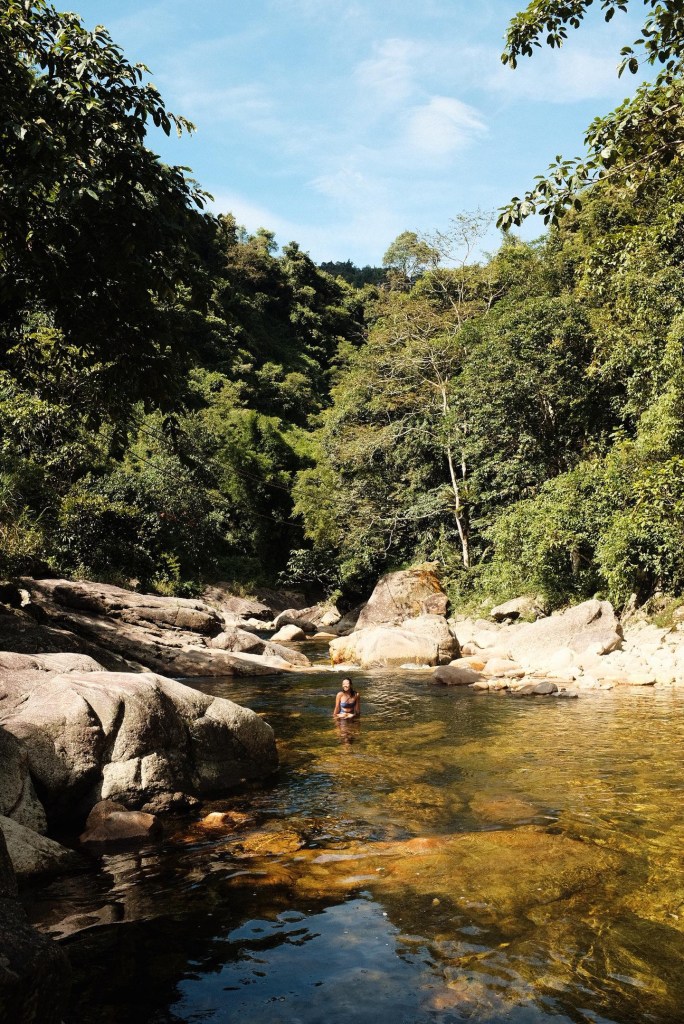
after Anh John slipped the officer a short stack of cash and we were finally able to continue on our path, we did, indeed, stumble upon the most beautiful waterfall in the entire world. the water was crystal clear, the rocks were glittering, and the scene was serene. I took a leap from the 12-foot boulder that stood between me and the cold down under. I could have spent forever like that. suspended in the air. time standing still. thinking only about the next foreign environment that my body was about to be plunged into.

after an hour of playing and splashing like kids do, it was time to return to civilization. Ira and Tristan had a bus to catch and the rest of us had to go to the market to pick up the meat for dinner. we put our clothes and shoes back on and made our way back.
our motorbikes sped down the hills and we made it to the bus stop with seconds to spare. I hugged Ira goodbye, surprising myself because I was holding back tears over someone I had only known for three days. the couple waved goodbye as they headed onto their next adventure: back home.
the rest of us proceeded on to the main town for the errands that called our attention for the day, but the air was pregnant with a certain sad anticipation that some more goodbye’s would soon be imminent. Justin, Aurélien, and I braved the market with Anh John where we saw a variety of aromatic spices, sliced up animal parts, and unfamiliar desserts. this was my first time in vietnam encountering (trigger warning) dog meat. we had lunch at a local noodle joint where we discussed french mannerisms and swimming techniques.
by evening, it was time for us to head back to the homestay. I rode on the back of Anh John’s bike this time. just as we were about to leave town, I heard a voice call out: “AYO. JOHN.”
he abruptly hit the brakes, causing me to almost lose my grip on the bike. both our heads turned to the mysterious caller. we saw two people—a vietnamese woman and a white man—sticking their heads out the window of a bar called the hmong sisters and excitedly waving us down. John flashed a mischievous grin and asked me, “do you drink beer?”
“okay, so if Chi Nhi asks why we’re home so late, we popped a tire,” Anh John called out against the rushing wind. we had spent far longer than anticipated at the bar dining on bruschetta and smoking on marijuana. the group was an amazingly charming one, consisting of a british expat with dreams of opening a restaurant filled with live music in sapa, a saigonese vietnamese woman with a knack for rolling joints, and her french husband who had owned and operated the bar for over a decade. they discussed old news and new news, reminiscing on good times and jeering Anh John for not coming by with his guitar more often. by the time we left, it was already getting dark.
I nodded in agreement and looked out at the rice-fields and saw a smoke-filled valley. the smoke was billowing in streams out of the chimneys of little lit-up homes nestled in between the hills. as if noticing my surprise, Anh John chimed in: “you have good timing. today is the first day of harvest. the hmong people are all burning the rice they just harvested and celebrating with plum wine tonight. it’s the most important night of the year.”
“or bad timing,” I responded. “I have to get on a bus tonight. no plum wine for me.”
he chuckled, “there’s always a reason to stay longer, huh.”
emboldened by the smoke I had been inhaling or brave from anticipation of leaving that night, I pressed further, “why did you stay?” I knew Anh John was originally from saigon. his southern accent that resembled the accents I knew so well from back home had made that abundantly clear. sapa was even further north than hanoi, making him far, far from home. I found solace in that fact: that he, too, was far from home in a land that was familiar but so very different.
as if emboldened by the same forces that made my lips loose, he said, “you know, I used to be a tour guide.” he told me about how he had perfected his english in the same way that he studied music: by listening the sounds people made. he told me about how one day he decided he was done with the city life and so he took his motorcycle and drove across the country. he talked about how he had never left vietnam but spent his life talking to foreigners and dreaming of going snowboarding. I asked him about what it was like to grow up in vietnam in the 90’s, In the era when the country was opening up its borders for the first time since the war. he recounted to me what it was like to grow up under viet cong’s communist rule. he talked about the industrial transformation the country underwent in the early years of his childhood. we talked about corruption in the vietnamese government and corruption in the american government. he shared with me the hopes that his generation had for the country’s future.
“it’s really refreshing to be able to talk to you like this,” I admitted to him. “my family members in saigon only speak vietnamese, so it’s hard sometimes to ever ask them these types of questions.”
“wait, so you only talk to vietnamese with your family?”
I nodded.
he let out an uncharacteristic laugh: “your vietnamese is not good! they must think you are so funny.”
I laughed. it was true. my family in saigon thought I was funny because they couldnt’ understand me. they looked at me like I was this odd, fearless creature when I told them I wanted to travel alone. I couldn’t find an explanation to give them as to why. and, when I think about it, my family back home in the states likely thought I was pretty odd, too. a girl with the privilege of being born in america, but desperate to go back to vietnam. everywhere I’ve gone in life, I’ve always felt a bit odd. a bit out of place, restless to be on my own. restless to escape from this life and move onto the next. but here I was, in a land where it felt easy to make friends and easy to stay. a place full of other odd characters who were also restless to discover a new life.
I took one last glance at the misty fields which were quickly falling out of my line of vision as the night sky began making her appearance. I closed my eyes and reveled in that moment: suspended in air, time standing still. my last moments in sapa.
 nhiều chuyện, by angel lin